
MIC (Joystick Module)
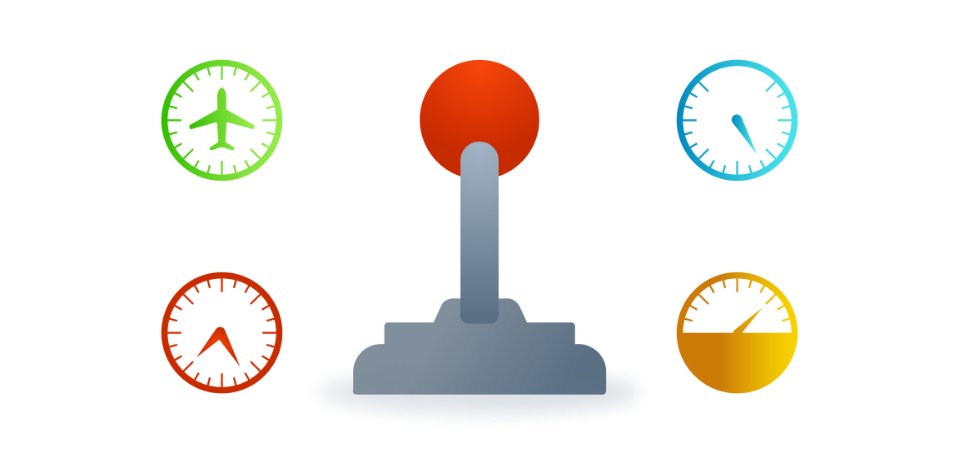
This test measures psychomotor coordination and multitasking ability using a joystick and touchscreen.
What is the MIC Module?
In this test, you will see several instruments on the screen that are similar to those found in a Cessna cockpit. Your task is to monitor these instruments and make the required inputs at the correct time. This test is not a flight simulator; it is designed to measure psychomotor coordination and multitasking ability. No previous flight experience is required.
1. Heading Indicator
Controlled using the joystick (left/right) with your right hand.
- A green dot marks the target heading.
- Turning right increases the heading value (compass moves left).
- Turning left decreases the heading value (compass moves right).
- Stronger/longer inputs cause faster changes.
GIF: Cessna-style instruments (Heading, Altimeter, Airspeed)
2. Altimeter (Altitude)
Controlled using the joystick (forward/back).
- Pull back: Climb (indicator turns clockwise).
- Push forward: Descend (indicator turns counterclockwise).
- Large needle = 1,000 ft, Small needle = 100 ft.
- Return joystick to neutral to maintain a climb/descent rate.
GIF: Joystick for Heading/Altitude, Touchscreen for Speed/Audio
3. Airspeed
Controlled using + / − buttons on the touchscreen.
- + button: Increase power/speed.
- − button: Decrease power/speed.
- Pitch effect: Climbing reduces speed; descending increases speed.
- Adjust power to maintain constant speed during altitude changes.
Auditory Task
Listen to aviation alphabet letters (e.g., Alfa, Bravo) through headphones.
- White Button: Press after 3 consecutive vowels (A, E, I, O, U).
- Red Button: Press after 3 consecutive consonants.
- Response must be given immediately after the third letter.